.svg)


Most guides to visiting a care home tell you the same things. Ask about staffing ratios. Check the latest CQC rating. Look at the menu. These things matter, but they are also the things every care home is prepared to answer well.
The harder truth is that the difference between a good care home and a poor one is rarely visible in a brochure or a data table. It is visible in small moments, and only if you know where to look and what questions to push on when the first answer does not quite satisfy you.
This guide is written from the perspective of people who have seen both sides of care: families who have made this decision and staff who work in it every day. It will not tell you to check whether the home is clean. You already know that. It will try to tell you the things that are harder to see.
What the CQC rating does and does not tell you
The Care Quality Commission inspects and rates care homes in England using five questions:
- Is the service safe?
- Is it effective?
- Is it caring?
- Is it responsive?
- Is it well-led?
Ratings run from Outstanding to Inadequate. A Good rating is the most common outcome and means the service meets the expected standard.
What a rating does not tell you is how recently the inspection happened or how much may have changed since. The CQC inspection system has been under significant reform since 2024, following an independent review that identified serious failings in how inspections were being conducted. A new framework is expected to be fully in place by the end of 2026, but in the meantime, ratings on any individual home may reflect an inspection carried out years ago.
Always look at the date of the most recent inspection alongside the rating itself. A home rated Good three years ago may have experienced significant staff turnover since then. Our article on care home quality ratings and the new CQC approach explains how the system is changing and what it means for families trying to make sense of ratings right now.
What to notice in the first five minutes
Before a single question is asked, a care home visit is already telling you things.
The smell. A well-run home does not smell of urine or strong cleaning chemicals masking urine. The two are not the same, and experienced noses know the difference. A faint smell of food, coffee, or fresh air is normal. An overwhelming chemical smell in a lobby is often covering something.
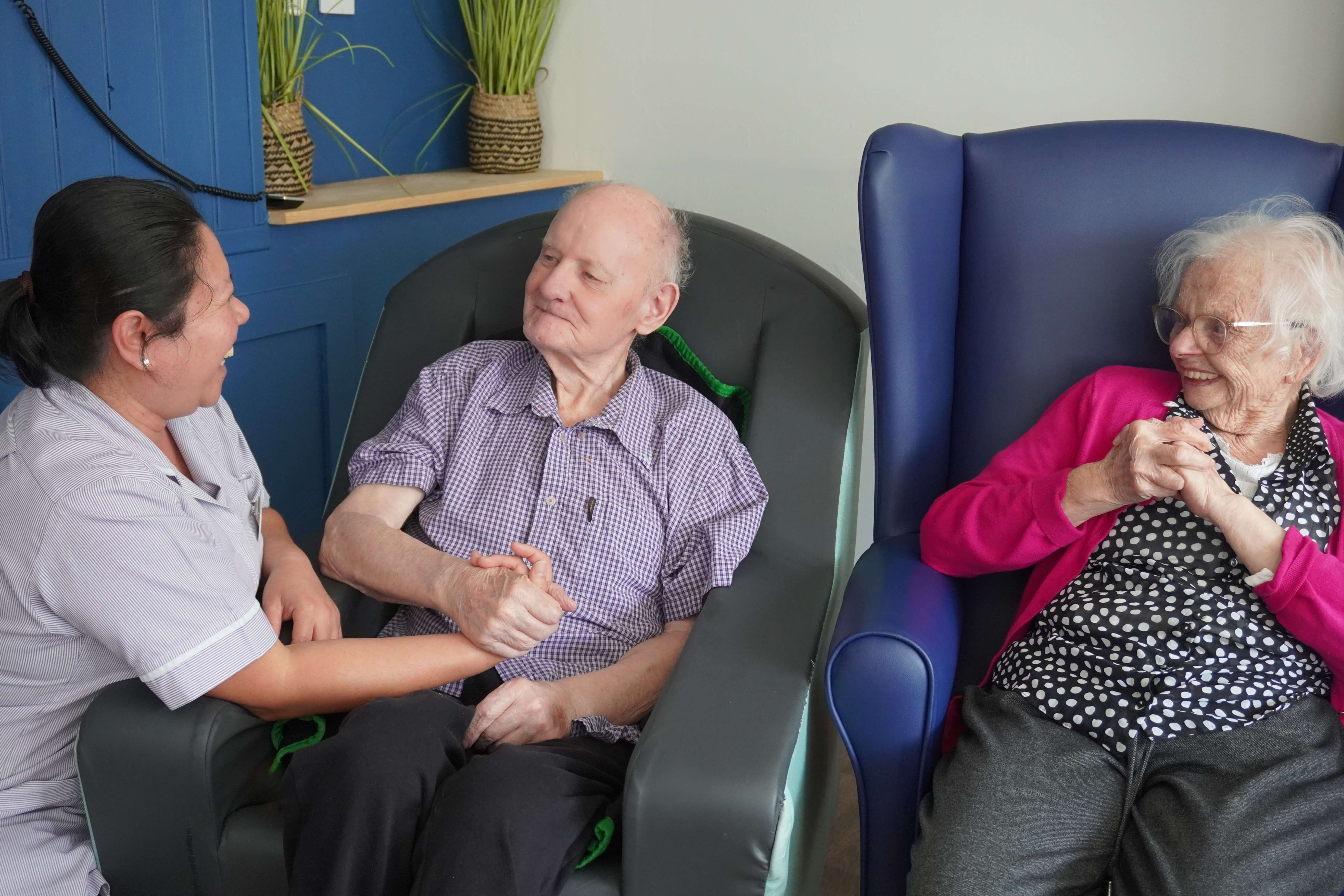
Where the residents are. A good care home has residents in communal areas during the day, in the lounge, the dining room, garden spaces if the weather allows. A home where most residents are in their rooms by mid-morning is a home where activity and social engagement are not being prioritised.
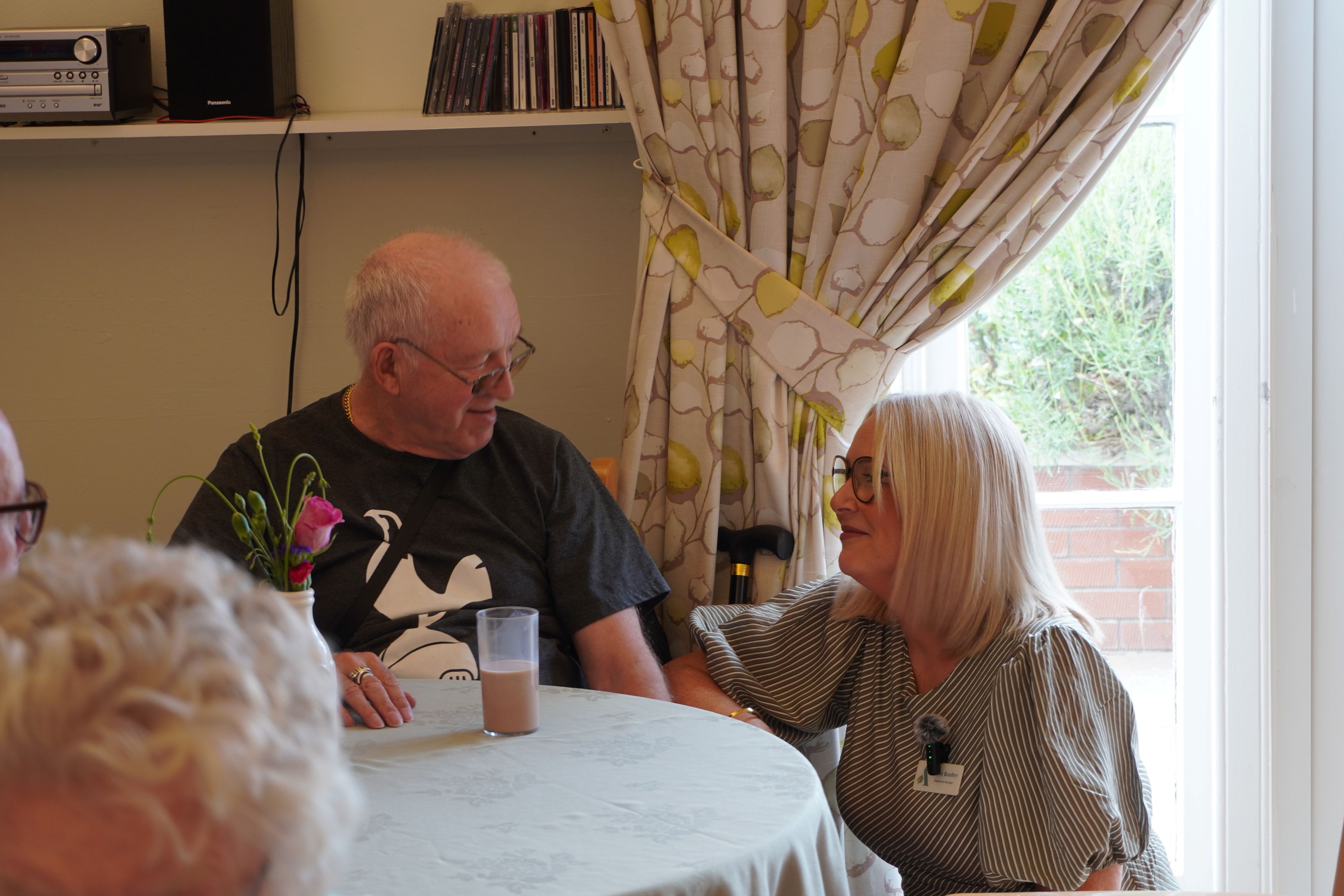
How staff speak to residents when they think no one is watching. Not how they greet you at the door, but how they speak to a resident in a corridor as you walk past. Is it with their name? Is there eye contact? Is there warmth, or just efficiency?
Whether the staff seem rushed or calm. A care home with adequate staffing has a particular quality to its atmosphere. The difference between a team managing and a team coping is visible in how people move and what they have time for.
"You notice it within five minutes of walking in. Whether people look pleased to be there. Whether the residents look at ease. That is not something you can fake for a whole building."
— Ashberry Care Homes
The staffing questions that deserve a direct answer
Staffing is the single biggest factor in the quality of daily life in a care home, and it is also the area where homes are most likely to give you a number that sounds reassuring without telling you much. Ask these questions and push for specifics:
- What is the staffing ratio during the night shift? Daytime ratios are almost always higher. What happens overnight matters.
- How often are agency staff used, and in what volume? A home that relies heavily on agency workers has inconsistency built into its care. Residents build trust with familiar faces. Agency staff rotate by definition.
- What is the staff turnover rate? A high turnover rate is one of the clearest indicators of poor management, poor pay, or poor culture. Many homes are not asked this and may not have a ready answer.
- What dementia-specific training do staff receive, and how recently? Not induction training. Ongoing, refreshed training. Good homes will answer this with detail.
Questions about daily life that reveal more than they appear to
Ask what a typical Tuesday looks like for a resident who does not have visitors. This is more useful than asking what activities are on offer, which invites a brochure answer. A specific day, with no visitors as a qualifier, reveals what daily life actually looks like rather than what is possible when the calendar is full.
Ask what happens when a resident does not want to take part in an activity. A good answer involves respecting the person's choice and finding other ways to engage with them. A poor answer implies participation is expected.
Ask how the home handles a resident who is having a very difficult day. A good home will answer this with specifics: a named protocol, a trained lead, an approach rooted in the individual's care plan. A poor home will speak in generalities.
Ask whether you can visit at a different time from your initial tour. Morning visits, or late afternoon when sundowning can affect people living with dementia, tell you things a polished lunchtime tour does not. A home reluctant to accommodate a differently-timed visit is worth examining more carefully. Our article on sundowning in dementia explains why the late afternoon can be a particularly revealing time to visit.
"We always encourage families to come back at a different time of day. Come on a Tuesday morning. Come at teatime. See what it looks like when it is just an ordinary day."
— Ashberry Care Homes
The funding questions that often go unasked
Families sometimes feel uncomfortable raising money during what feels like a sensitive visit. But understanding the financial terms before any commitment is made is essential, and a good care home will expect and welcome this conversation.
Ask what the weekly fee includes and what it does not. Many homes charge separately for:
- Hairdressing and chiropody
- Some therapies and treatments
- Trips and outings
- Particular personal care items
The gap between the headline fee and the true weekly cost can be significant.
Ask what happens if your funding situation changes. If a self-funder's savings begin to fall towards the threshold at which local authority support might be needed, will the home continue to accommodate them? Not all homes accept local authority fee rates. Knowing this before choosing a home protects you from a very difficult conversation later. Our article on what happens when self-funding runs out explains how that transition works.
Ask what the home's policy is on annual fee increases. How often do they happen? What notice is given? What has the increase been in each of the last three years? Annual increases above inflation are common in the sector and can significantly disrupt long-term financial planning. If a top-up fee is involved, our article on how care home top-up fees work explains your rights.
The question about what happens when things go wrong
This question is almost never asked on an initial visit, and it is one of the most important.
Ask what the complaints process looks like. Not because you expect to need it, but because how a home talks about complaints reveals a great deal about its culture. A home with a clear, confident, well-practised answer takes accountability seriously. A home that becomes vague or overly reassuring is worth noting.
Ask whether any formal complaints have been made in the last year and how they were resolved. A home that has had no complaints is not necessarily better than one that has. It may simply be a home where residents and families do not feel empowered to raise concerns.
Ask who to contact if something feels wrong overnight or at a weekend. The answer tells you whether accountability is embedded into the structure or depends on catching the right person on the right day.
What a deflection sounds like
Care home managers are experienced at fielding questions. That is not a criticism, it is part of the job. But there is a difference between a confident answer and a deflection that sounds like one.
A confident answer is specific. It uses numbers, names, examples, and recent events. It may acknowledge a difficulty and explain how it was addressed.
A deflection is warm but vague. It reassures without informing. It turns a specific question into a general statement about values or ethos. It redirects to something the home is proud of rather than addressing what was asked.
If you notice a deflection, try asking the same question a different way, or ask for a specific example. A home with nothing to hide will usually find one. A home that struggles to do so twice is telling you something.
Trusting what you feel
After a visit, before you look at the brochure again or compare the fees, sit with how you felt walking out of the building.
Did you feel welcomed or managed? Did the staff seem to know the residents, or process them? Did the place feel like somewhere a person could be comfortable, or merely somewhere they could be safe? Both matter, but they are not the same thing.
The right home is not necessarily the most expensive, the newest, or the most recently rated. It is the one where the people working there have clearly chosen to be there, where the residents seem settled and known, and where your questions were answered with honesty rather than performance.
Our guide on finding the right care home for your loved one is a useful companion read once you have your shortlist.
If you would like to visit one of our Ashberry homes, we welcome visits at any time and are happy to answer every question on this list. Make an enquiry and we will arrange it.